• Skip to primary navigation
  • Skip to main content

Common English Errors

Common Errors/Mistakes in English

  • Please Find Attached
  • Since 2 Years or For 2 Years?
  • Past Year or Last Year?

Grammar

Grammar

Can’t Have Been vs. Couldn’t Have Been: How to Use Them Correctly

When it comes to modal verbs — the verbs that express necessity or possibility — many learners find them rather confusing.

I’ve written a couple of posts on the correct usage of modal verbs before. In this guide, I’d like to share with you tips on how to use Can’t Have (Been) and Couldn’t Have (Been) correctly.

So, let’s get started.

Can’t Have (Been)

This is used for two reasons — first, to express a degree of certainty of an event in the past; second, to frame a conditional phrase for a past event.

Let’s see some examples:

✅ Bryan can’t have committed the crime as he was in another country at the moment of the murder.

✅ Sally can’t have been hungry as she had already had two regular pizzas a little while earlier.

In the above examples, the speaker is expressing a degree of certainty about the events. Evidently, the speaker is saying that there was no way Bryan committed the crime as he was elsewhere when the murder was committed.

Similarly, in the second example, the speaker is refusing to believe that Sally was hungry since she’d already eaten enough just a while ago.

As you can see, Can’t Have (Been) is used only when you’re referring to an event in the past. So, don’t let the “can’t” lead you to think it can be used in the present tense.

Couldn’t Have (Been)

This is used, broadly, in three different scenarios.

✅ Expressing Impossibility of a Past Event

✅ Expressing Hypothetical Conditions

✅ Expressing One’s Inability in the Past

Expressing the Impossibility of a Past Event

As with the Can’t Have (Been), Couldn’t Have (Been) can also be used to express the impossibility of a past event.

Here are some examples:

✅ They couldn’t have kept track of the exact time as the clock didn’t exist back in those times.

✅ Mary couldn’t have defeated her opponent as she didn’t have any formal training in boxing.

In the examples above, the speaker is talking about the impossibility of the outcome under a specific circumstance.

As you can see, both Can’t Have (Been) and Couldn’t Have (Been) are used to express the impossibility of a result in the past.

So, what’s the real difference in their usage?

While Can’t Have (Been) is used to refer to an incident in the near past, Couldn’t Have (Been) is used for an event that happened way back in the past.

Let’s use some examples for comparison:

✅ He’s been limping since this past week; he can’t have won the race yesterday at all.

✅ Her father couldn’t have been rich overnight; he came from a pretty humble background.

As you can see, in the first example, the speaker is talking about the impossibility of the outcome of an event that’s related to the near past.

On the other hand, in the second example, the speaker negates the probability related to an event occurring in the remote past.

Expressing Hypothetical Conditions

Using Couldn’t Have (Been) to express a hypothetical condition is very common in everyday conversations. It’s typically used with “had (been)”.

For example: “I couldn’t have succeeded if she hadn’t offered any help.”

Of course, you can also say, “I couldn’t have succeeded without her help”.

The point is there’s a condition involved here.

REMEMBER: When “Couldn’t Have” is used as a past conditional, “Can’t Have” cannot be substituted, in any style.

For example: “Jon couldn’t have (Not Can’t Have) made it to the top without his support from his family.”

If you’re looking for more examples, please, read this guide on the conditional hypothesis.

Expressing One’s Inability in the Past

You can use “Couldn’t Have (Been)” to express your lack of ability, talent, skills in the past.

For example: “Sandra was talented enough to pass the grueling test; I know I couldn’t have made it.”

That’s it! I hope you enjoyed reading this guide and found it useful. Let me know if you have any questions!

Search Terms: can’t have meaning, can’t have done, couldn’t vs couldn’t have, could not have been grammar, couldn’t have been better meaning, can’t have sentences, couldn’t have been meaning, couldn’t of grammar
7 years ago [postview]

Grammar

When Do I Use “I” Instead of “Me?”

One of the most basic yet confusing rules of English grammar is the choice between “me” and “I”.

It’s one of those things that baffle many native English speakers let alone non-native English speakers.

So when someone asks you on the phone, “Is that you?”, how would you answer?

Well, to understand this better, let’s dive into the dynamics of English grammar.

There are a couple of things you should know upfront to better understand the rules and practice of English grammar.

Linking Verbs: Also called non-active verbs, linking verbs don’t describe an action. They simply describe a state of being. Some of the examples of linking verbs are “Am, Is, Are, Were”.

Pronouns: Pronouns are words that substitutes nouns or noun phrases. For example, we say “He/She is a great person” instead of “Bob/Mary is a great person” when we mention a person repeatedly in our speech.

Subject Case: Subject Case is the word that defines an object or a person. For example, It/This/I/They/We/He/She are subject cases in a sentence.

Object Case: Object Case is the word that occurs after a linking verb and often completes a sentence. For example, “She’s a girl” and “I’m Bob” where Girl and Bob are object cases.

As per traditional grammar rules, when a pronoun follows a linking verb, it should be in the subject case. For example:

  • It was I (not me) who started the fight. (where “I” remains unchanged)
  • It’s he (not him) who told me to be careful. (where “he” remains unchanged)
  • It’s they (not them) who took responsibility for the accident. (where “they” remains unchanged)
  • It’s we (not us) who care about you. (where “we” remains unchanged)

Nominative Case: When a noun/pronoun is used as a subject, it’s called Nominative Case. For example, Bob/He ate a hamburger. (Bob/He = Nominative Case)

Accusative Case: When a noun/pronoun is used as an object, it’s called Accusative Case. For example, Mary/She made our dinner. (Dinner = Accusative Case)

We use the nominative case while answering simple questions. For example:

Question: Who is there?
Answer: I’m here. (‘I‘ is a nominative case)

However, when the answer involves a personal pronoun (e.g. she/he/they/we), we tend to use the accusative case even though it’s not correct in formal grammar. For example:

Question: Who is it?
Answer: It’s me. (accusative case) | It’s I. (nominative case)

Predicate Nominative: The predicate nominative is a noun or pronoun that’s on the object end of a linking verb. We use predicate nominatives all the time. For example:

  • The lake was a frozen pool. (frozen pool = predicate nominative)
  • He’s Bob. (Bob = predicate nominative)

Most predicate nominatives are identical in their subject and object cases. However, many people get confused when predicate nominative involves personal pronouns because those have very different subject and object cases. For example, I and He are subject cases whereas ‘Me‘ and ‘Him‘ are object cases.

The rules of grammar say the predicate nominative should use the subject case even though it’s in the object position.

What does this mean?

This essentially means I (a personal pronoun) must remain I even when it takes the object position in a sentence. For example:

  • I am Bob ( where I = Personal Pronoun in Subject Case | Bob = Predicate Nominative in Object Case)
  • It is I (where It = Singular Pronoun in Subject Case | I = Predicate Nominative in Object Case)

Therefore, as per the strict rules of grammar, you should say, “It’s I,” rather than “It’s me,.”

Considering the strict grammar rules, you should also say the following things:

  • It’s we. (instead of It’s us)
  • It’s he. (instead of It’s him)
  • It’s she. (instead of It’s her)
  • It’s they. (instead of It’s them)

However, you’re not supposed to follow these rules in your everyday communications. In fact, old grammar rules were based on Latin grammar rather than English grammar.

Therefore, it’s more appropriate to use Me/He/She/We/They in your natural communications. Indeed, it has become the norm in the English language.

The Verdict

If you’re writing formal dialogue or in a formal setting, use “It’s I.”

However, you can (and it’s more appropriate to) use “It’s me.” in your everyday communications.

Keywords:

  • it’s me or it’s i
  • it’s me or this is me
  • it’s me or it’s i which is correct
  • it wasn’t me or it wasn’t i grammar
  • it’s me grammar rule
  • it wasn’t me or it wasn’t i grammar
  • it will be me or i grammar
  • it was not me or it was not i grammar
  • is it me or is it i which is correct english
  • it is me or it is i which one is correct
  • Me and i grammar rules

8 years ago [postview]

Grammar

When to Use “If I was” vs. “If I were”, Which One is Correct?

A lot of people use “If I was” instead of “If I were” when they use a subjunctive mood in a hypothetical situation.

Just so you know – this is wrong!

According to English rules, when you use a subjunctive mood in a hypothetical situation, you should use “If I were”.

What is a Subjunctive Mood?

The subjunctive mood is used in a hypothetical situation when you state something that is contrary to the fact.

In other words, when you wish for something that is simply not possible, or unreal, you use a subjunctive mood.

Here are some examples of Subjunctive Mood:

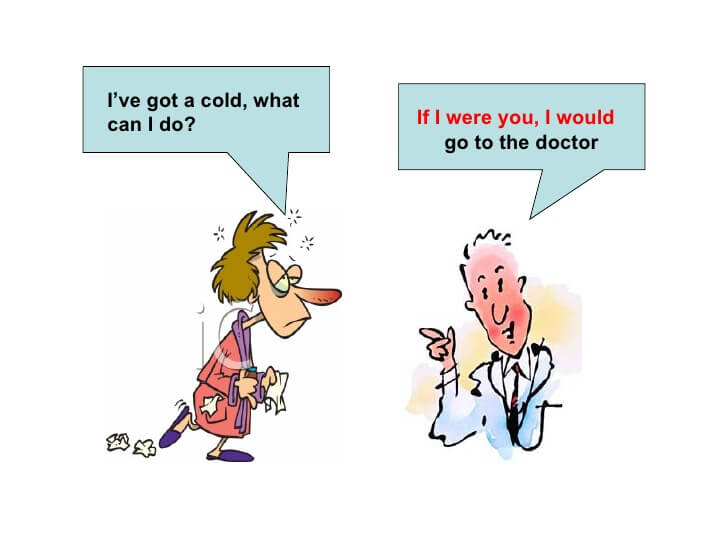
✅ If I were you, I would work harder.

✅ If I were your father, I would take good care of you.

✅ If you were my girlfriend, I’d never let you cry.

✅ If he were taller, he’d be accepted into the basketball team.

✅ If she were alive, she’d be super happy to see you succeed.

In all of these examples, the mood is subjunctive, meaning, the speaker is speaking of a hypothetical scenario that simply can’t be true.

Where Can I Use “If I Was”?

Based on the aforementioned argument, it’s possible to use “If I was” when something is not true at the moment, but it can be if the speaker tried.

For example:

If I was the captain of this team, we could win more matches.

Explanation: The speaker is a team member at the moment, but it’s very much possible that he could be the caption in future. It’s NOT unrealistic for him to lead the team in future.

Let’s consider a few more examples:

✅ If he was guilty of his actions, he’d apologize.

✅ If Rand was hardworking, he’d make more money.

As you can see, in these examples, we’re not talking about an unrealistic scenario. Therefore, “was” is more appropriate.

Be Careful of the Common Mistakes

There are many non-native speakers who tend to use “If I was” to explain their past actions.

Please, note that you absolutely cannot use “was” in a hypothetical scenario of the past. Instead, you should use “had been”.

For example:

Incorrect: If I was driving, you’d have felt safer.

Correct:

If I were driving, you’d feel safer. (If the speaker is talking of the present scenario.)

If I had been driving, you’d have felt safer. (If the speaker is talking about a scenario which has passed.)

Final Words

As you can see “If I were” is used only when it’s clear something is simply impossible, e.g., if I were a bird. Similarly, “If I was” is used when you presume a fair possibility of an event.

However, in practice, many purists still believe the speaker should stick to “were” if they were speaking of a situation that is currently untrue, e.g., if I were the captain.

On the contrary, many modern speakers believe it’s just a matter of choice. If you want to sound formal, use “were”.

8 years ago [postview]

Grammar

One Less Thing vs One Fewer Thing: Which One is Correct?

When it comes to the use of “little/less/few/fewer”, quite a few non-native speakers of English fumble, quite easily.

Indeed, the difference between “less/few” can confuse many learners of English. More often, the choice also depends on the context of the sentence.

For your information, I’ve already written an easy-to-follow guide on how to use “less vs few” without any confusion.

Speaking of context, take a look at the following examples, and pick the right alternative.

  • It’s (less/fewer) than three hundred kilometers from Mumbai.
  • It costs (less/fewer) than 60 dollars.
  • He’ll arrive here in (less/fewer) than 20 minutes.
  • Can you write the essay in 100 words or (less/fewer)?

If you think the answer is “fewer” in all of the examples above, I’m afraid it’s incorrect.

The right answer is “less”.

Note: The last example may be confusing to many as “words” is a countable noun. I highly recommend reading this post by Anne Curzan to understand the distinction better .

The reason is simple – even though we use “fewer” for countable nouns, here, as per the context, “three hundred kilometers, 60 dollars, 20 minutes, and 100 words” are more about distance, money, time, and length respectively. Therefore, we should use less rather than fewer.

There’s a strong reason why I cited these examples before discussing “one less thing vs one fewer thing” argument.

Okay, now, let’s take a look at the examples below.

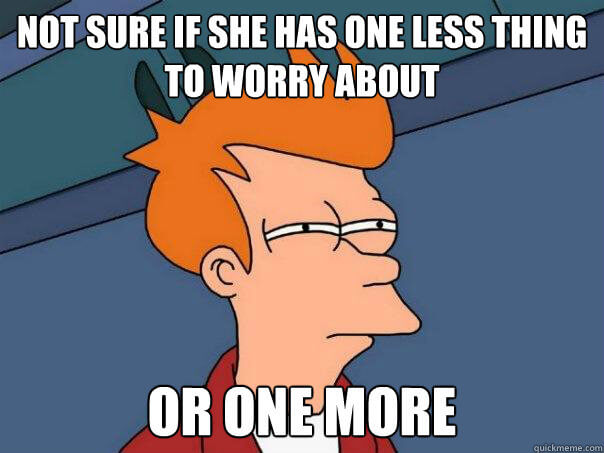
  • I now have one less thing to worry about. (Correct)
  • I now have one fewer thing to worry about. (Incorrect)

A lot of non-native English learners tend to wonder if “one less” thing is incorrect since we’re talking about a list of challenges here.

However, the logic is quite different here.

Let’s first discuss why “one fewer” would be incorrect.

As per the rules, “fewer” applies to more than one of something.

In the example above, we are only talking about “that one thing” and not a bunch of things. Hence, “fewer” is incorrect.

Why “One Less Thing”?

It has a lot to do with the context. When we talk about a list of things, we essentially mean that it’s an endless effort in the grand scheme of life. When you imagine the list of tasks you must accomplish in your entire life, it’d seem virtually immeasurable. In other words, it’s like time or distance. Hence, it’d be “less” rather than “fewer”.

There’s another way to explain our answer as well.

If you try to rewrite or interpret the sentence above, it would read like:

“I now have less to worry about, by one thing”. (Sounds Right)

If we try to replace “less” with “fewer” in this sentence, it would read like:

“I now have fewer to worry about, by one thing”. (Sounds Strange)

One Less Thing vs One Thing Less

If you’re wondering if you should use “one less thing” or “one thing less”, rest assured both are correct. However, “one less thing” is more common than “one thing less”.

So, here’s the recap of what we’ve discussed in this guide so far.

  • I now have one less thing to worry about. (Right)
  • I now have one thing less to worry about. (Acceptable)
  • I now have one fewer thing to worry about. (Wrong).
  • I now have one thing fewer to worry about. (Wrong)

Let me know if you have any questions.

8 years ago [postview]

Grammar

Visited vs Have Visited vs Had Visited: How to Use Them Correctly

Are you a non-native English speaker, confused between “visited vs. have visited”? This post will help you understand the grammar rules once and for all.

Using correct tense is an important part of every business communication as it reflects your personality, especially when you’re communicating with someone who is well-versed in the English language.

It’s quite common to find many non-native English users confusing “past tense” with “present perfect tense”.

So, let’s take a look at some examples below:

❎ I have visited the doctor this past week. (wrong)

❎ Have you met your mother yesterday? (wrong)

So, what do you think is wrong with these examples?

Explanation: This is a pretty common error in Asian countries where English communication is largely affected by their mother tongue. Many non-English languages carry grammar rules which can be very different from the grammar rules we follow in the English language.

In the English language, when you describe an event that occurs in the past, i.e. yesterday or last week, you essentially use the “past simple” tense of the verb.

In the examples above, “yesterday” and “this past week” are both “adverbs”, meaning they define the nature of the verb that precedes them.

In the first example, the speaker talks about an event (visiting the doctor) with information about its occurrence (this past week).

Please, note that the “timing of the event” (or time adverb) is of utmost importance here, which decides the “tense form” the verb must take in the sentence.

Here, “this past week” refers to an event that clearly occurred in the past. Therefore, the event itself (visiting the doctor) must take “the past simple tense”.

Hence, it would be right to express yourself in the following way.

I visited the doctor this past week.

Similarly, the correct version of the second example would be:

Did you visit your mother yesterday?

To make it even clearer for you, here’s how you should break the sentences to understand which tense they should take.

I + visited + the doctor + this past week

Visited = the “past simple tense” of the verb “visit”.

This past week = the adverb denoting “timing of the event”.

Know Your Adverbs

It’s important to know your adverbs well enough in order to form correct sentences, using the appropriate tense.

Let’s consider a few examples with different adverbs.

Now, Currently, Right Now, Today

You can use either present continuous or present perfect tense with these verbs. However, you can never use “past simple” with these.

For example, the following examples would sound plain stupid:

❎ He was unemployed currently. (incorrect)

❎ He’s unemployed currently. (correct)

❎ Was he sick right now? (incorrect)

❎ Is he sick right now? (correct)

❎ I came here today. (incorrect)

❎ I’ve come here today. (correct)

However, there are some “adverbs” that can take both “past tense” as well as “present perfect tense” depending on the context.

Here are Some Examples:

✅ Example #1: I have purchased a CD player recently. (present perfect tense)

✅ Example #2: I purchased that CD player recently. (past simple tense)

Oxford Dictionary defines “recently” as an adverb denoting “at a recent time” and “not long ago”.

Explanation:

In Example #1, we are using a perfect tense in order to name the action as the source of the present state. Whereas, in Example #2, we are using a past tense since the action is one of a sequence of past actions, a narrative.

Please, keep in mind the present perfect is a present tense, which makes a statement about the situation at the time of speaking.

However, the following example would be incorrect.

❎ I have purchased that CD recently.

This is because when you are talking about purchasing “that CD”, you have presumably purchased it in the past. Therefore, you should rather say, “I purchased that CD recently”.

Visited vs Had Visited

Believe it or not, many non-native English users find it hard to differentiate between past simple tense and past perfect tense. They often wonder if the two could be used interchangeably.

The truth is both these tenses offer different contexts to the event. Take a look at the following examples:

  • Example #1: I visited my doctor yesterday.
  • Example #2: I had visited my doctor yesterday.

Which of the above examples is correct?

Answer: The first one.

Explanation:

We use past tense when the time is specified, e.g. yesterday.

We use past perfect tense only when we refer to another event (a concurrent event) in the past. In other words, it must carry some context – “what happened after you visited the doctor yesterday?”

For example:

I had watched television yesterday when it was time to go to bed.✅ Activity in the past = “it was time”.

✅ Activity before the past = “had watched television”.

I had watched television yesterday, by the time my parents came back.

✅ Activity in the past = “my parents came back”.

✅ Activity before the past = “had watched television”.

In short, without any context to “the other activity” that was done after watching television, using “had watched” would be incorrect.

Therefore, if you only mean to mention “watching television” in the past, simply say, “I watched television yesterday”.

I hope this helps. Please, let me know if you have any questions.

Source: Stack Exchange and Quora

8 years ago [postview]

Grammar

How to Write Effective Business Emails at Work

There’s a difference between writing emails to friends and writing emails to your boss at work.

It’s the quality of grammar and correct spelling, and tone that matters a lot in business email writing.

We tend to be laid-back while writing emails to friends and family because it’s a casual or semi-casual communication –  there’s nothing to lose if they find a few errors.

However, you can’t afford to do so when, for example, you’re applying for a job to your prospective employer.

Unfortunately, a lot of people don’t really write their business emails seriously enough even when they know it’s crucial to their job. Many don’t even know how to write a proper business email.

Here’s in this article, I’m going to share with you a few tips which will help you write proper business emails without committing any silly English errors.

First off, let’s look at an outline of a typical business email with different fragments.

  • Opening (informal greeting)
  • Referring to previous emails (format tone)
  • Stating the purpose of email (formal tone)
  • Making requests (formal tone)
  • Referring to attachments (formal tone)
  • Promising actions (formal tone)
  • Closing (informal greeting)

Opening of a Business Email

The opening of a business email usually carries an informal or casual tone. For example:

Hey Rand,

I hope you’re doing well! / How was your weekend? / How was your day off? / Hope you had a restful weekend! / How are you doing today?

Referring to Previous Emails

Before stating the purpose of your email, relate it to any of your previous correspondences. It usually carries a formal tone. For example:

  • With regards to your request for a quote…
  • In reference to our telephone conversation last week…
  • Further to our discussion at the meeting yesterday…

Stating the Purpose of Your Email

After referring to the previous correspondence, you need to state the purpose of your email. It usually carries a formal tone. For example:

  • I’d like you to have a look at the quote.
  • I’m writing to share my ideas on the project.

Making Requests in Business Emails

If you’re requesting the recipient of something, you need to use a formal tone and articulate your voice to make the best impact possible. For example:

  • I was wondering if you could allow me a day off!
  • Could you please let me know the status of the project?
  • It’d be great if you could keep me informed on the progress!

Referring to Attachments

This is one of the most crucial parts of business emails. Many tend to phrase their sentences incorrectly while referring to attachments.

I’ve written a very comprehensive post on how to refer to email attachments.

Here are some examples:

  • Please, see the attached report for your easy reference!
  • Kindly, review the attached proposal and let me know your thoughts!
  • Could you approve the attached quote!

Promising Actions

Depending on the context of your email, you can promise some action in order to set an impetus to your communication. You should usually use a formal tone here. For example:

  • I’ll get back to you after reviewing your proposal.
  • I’ll keep you posted on the progress of the project.
  • I’ll let you know the status of your interview by next week.

Closing a Business Email

You can close a business email with a casual or informal tone. This is a business courtesy. For example:

  • Have a great weekend!
  • Enjoy your day off!
  • All the best!
  • Keep up the great work!

Note: Remember to sign off your business emails in the following ways:

  • Thank You or Thanks
  • Cheers
  • Regards or Warm Regards
  • Take Care

Avoid the Following Mistakes in Business Emails

The way you write your business emails reflects a lot of your professionalism. There are a number of online resources (including Google Search) to help you hone your email writing skills.

There are no excuses for making mistakes.

Let’s take a look at some business email writing mistakes frequently committed at workplaces.

Including Exclusive Pronouns

Today, the workplace ambience is increasingly becoming more politically correct than ever. Using male pronouns while referring to female recipients is highly uncalled for.

To avoid this, use “him/her” or “his/hers”.

However, with the emergence of non-binary pronouns, you need to be more careful about referring to genders. Here’s an insightful article on BBC.

Being Confused about Similar Sounding Words

There are quite a few similar sounding words that easily confuse many. However, when you write business emails in a professional environment, you should brush up your elementary grammar to avoid any confusion. Keep a list of those common mix-ups and learn how to avoid them while writing emails.

Learn the Difference Between:

  • It’s and Its
  • Between/Among
  • Loose/Lose
  • Their/There
  • Than/Then
  • Accept/Except

Using CAPS

Using all upper case is considered a lack of etiquette in the online world, unless, of course, you want to yell at someone.

Similarly, don’t use multiple exclamation points/ questions marks/ dots.

The following examples sound odd in business emails.

  • How are you doing????
  • Please, let me know the status of the project!!!
  • I’ll wait for your reply…

Proofread Your Business Emails

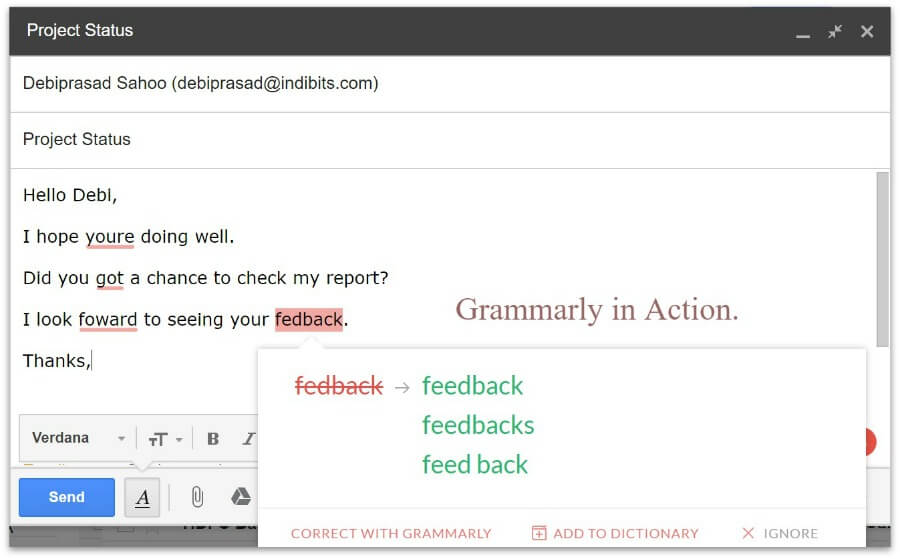
Always proofread your emails before sending them. Install Grammarly’s browser extension – I’ve found this extremely useful. The good news is it’s totally free!

Here’s a screenshot of Grammarly browser extension in action.

grammary-in-action

Grammarly is arguably the most effective online grammar checker in the world right now. It’s free to sign up for Grammarly.

Hope you find these tips useful for writing business emails. Let me know your thoughts and ideas in the comments below.

9 years ago [postview]

  • ← Previous
  • Page 1
  • Page 2
  • Page 3
  • Page 4
  • Page 5
  • Next →

© 2025 Common English Errors · Built on Genesis · Privacy Policy · Sitemap · Contact

This website uses cookies to ensure you get the best experience on our website.