
A lot of people use “If I was” instead of “If I were” when they use a subjunctive mood in a hypothetical situation.
A lot of people use “If I was” instead of “If I were” when they use a subjunctive mood in a hypothetical situation.
Just so you know – this is wrong!
According to English rules, when you use a subjunctive mood in a hypothetical situation, you should use “If I were”.
What is a Subjunctive Mood?
The subjunctive mood is used in a hypothetical situation when you state something that is contrary to the fact.
In other words, when you wish for something that is simply not possible, or unreal, you use a subjunctive mood.
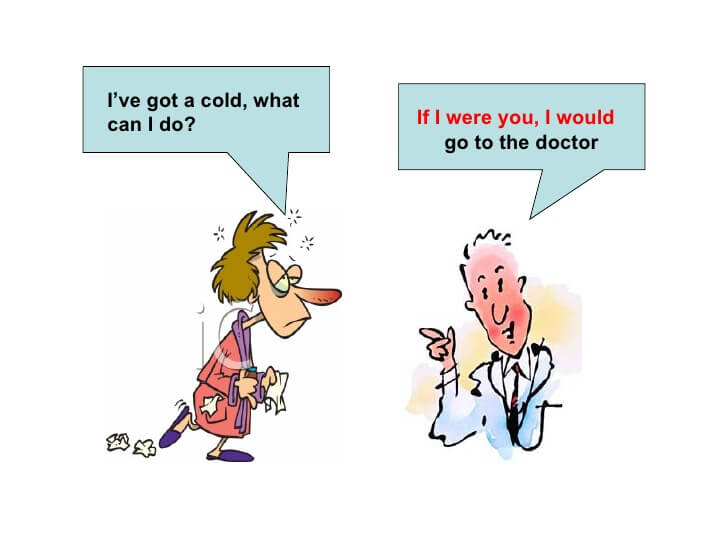
Here are some examples of Subjunctive Mood:
✅ If I were you, I would work harder.
✅ If I were your father, I would take good care of you.
✅ If you were my girlfriend, I’d never let you cry.
✅ If he were taller, he’d be accepted into the basketball team.
✅ If she were alive, she’d be super happy to see you succeed.
In all of these examples, the mood is subjunctive, meaning, the speaker is speaking of a hypothetical scenario that simply can’t be true.
Where Can I Use “If I Was”?
Based on the aforementioned argument, it’s possible to use “If I was” when something is not true at the moment, but it can be if the speaker tried.
For example:
If I was the captain of this team, we could win more matches.
Explanation: The speaker is a team member at the moment, but it’s very much possible that he could be the caption in future. It’s NOT unrealistic for him to lead the team in future.
Let’s consider a few more examples:
✅ If he was guilty of his actions, he’d apologize.
✅ If Rand was hardworking, he’d make more money.
As you can see, in these examples, we’re not talking about an unrealistic scenario. Therefore, “was” is more appropriate.
Be Careful of the Common Mistakes
There are many non-native speakers who tend to use “If I was” to explain their past actions.
Please, note that you absolutely cannot use “was” in a hypothetical scenario of the past. Instead, you should use “had been”.
For example:
Incorrect: If I was driving, you’d have felt safer.
Correct:
If I were driving, you’d feel safer. (If the speaker is talking of the present scenario.)
If I had been driving, you’d have felt safer. (If the speaker is talking about a scenario which has passed.)
Final Words
As you can see “If I were” is used only when it’s clear something is simply impossible, e.g., if I were a bird. Similarly, “If I was” is used when you presume a fair possibility of an event.
However, in practice, many purists still believe the speaker should stick to “were” if they were speaking of a situation that is currently untrue, e.g., if I were the captain.
On the contrary, many modern speakers believe it’s just a matter of choice. If you want to sound formal, use “were”.
Matthew W. I Dunn
Correct:
If I was driving, you’d feel safer
NOT CORRECT: “IF I *WERE* DRIVING, . . . “
Susanta Sahoo
Thanks, buddy! Corrected the typo!
Abdul Rahman Mohamed
Now I am confused. Which one is correct?
Carol Ann Brusven
“If I were the caption” should be “If I were the captain”
Susanta Sahoo
Good catch, Carol! Thanks a lot! Fixed it.
Skand Bhargava
In my opinion “If I was driving you’d feel safer” is correct because it is possible to change the current situation.
Jeannine
Were is for sentences that cannot be true and is mandatory in those sentences.
Whereas you can say “was” OR “were” in a situation that IS possible (I could be driving instead of you). It is not mandatory to use “was” in hypotheticals that are possible. It is also correct to use “were” in that sentence as well.
THUS, as a general rule it’s simply safer to use “were” in hypotheticals regardless of whether they’re possible/impossible.