• Skip to primary navigation
  • Skip to main content

Common English Errors

Common Errors/Mistakes in English

  • Please Find Attached
  • Since 2 Years or For 2 Years?
  • Past Year or Last Year?

Grammar

Can’t Have Been vs. Couldn’t Have Been: How to Use Them Correctly

When it comes to modal verbs — the verbs that express necessity or possibility — many learners find them rather confusing.

I’ve written a couple of posts on the correct usage of modal verbs before. In this guide, I’d like to share with you tips on how to use Can’t Have (Been) and Couldn’t Have (Been) correctly.

So, let’s get started.

Can’t Have (Been)

This is used for two reasons — first, to express a degree of certainty of an event in the past; second, to frame a conditional phrase for a past event.

Let’s see some examples:

✅ Bryan can’t have committed the crime as he was in another country at the moment of the murder.

✅ Sally can’t have been hungry as she had already had two regular pizzas a little while earlier.

In the above examples, the speaker is expressing a degree of certainty about the events. Evidently, the speaker is saying that there was no way Bryan committed the crime as he was elsewhere when the murder was committed.

Similarly, in the second example, the speaker is refusing to believe that Sally was hungry since she’d already eaten enough just a while ago.

As you can see, Can’t Have (Been) is used only when you’re referring to an event in the past. So, don’t let the “can’t” lead you to think it can be used in the present tense.

Couldn’t Have (Been)

This is used, broadly, in three different scenarios.

✅ Expressing Impossibility of a Past Event

✅ Expressing Hypothetical Conditions

✅ Expressing One’s Inability in the Past

Expressing the Impossibility of a Past Event

As with the Can’t Have (Been), Couldn’t Have (Been) can also be used to express the impossibility of a past event.

Here are some examples:

✅ They couldn’t have kept track of the exact time as the clock didn’t exist back in those times.

✅ Mary couldn’t have defeated her opponent as she didn’t have any formal training in boxing.

In the examples above, the speaker is talking about the impossibility of the outcome under a specific circumstance.

As you can see, both Can’t Have (Been) and Couldn’t Have (Been) are used to express the impossibility of a result in the past.

So, what’s the real difference in their usage?

While Can’t Have (Been) is used to refer to an incident in the near past, Couldn’t Have (Been) is used for an event that happened way back in the past.

Let’s use some examples for comparison:

✅ He’s been limping since this past week; he can’t have won the race yesterday at all.

✅ Her father couldn’t have been rich overnight; he came from a pretty humble background.

As you can see, in the first example, the speaker is talking about the impossibility of the outcome of an event that’s related to the near past.

On the other hand, in the second example, the speaker negates the probability related to an event occurring in the remote past.

Expressing Hypothetical Conditions

Using Couldn’t Have (Been) to express a hypothetical condition is very common in everyday conversations. It’s typically used with “had (been)”.

For example: “I couldn’t have succeeded if she hadn’t offered any help.”

Of course, you can also say, “I couldn’t have succeeded without her help”.

The point is there’s a condition involved here.

REMEMBER: When “Couldn’t Have” is used as a past conditional, “Can’t Have” cannot be substituted, in any style.

For example: “Jon couldn’t have (Not Can’t Have) made it to the top without his support from his family.”

If you’re looking for more examples, please, read this guide on the conditional hypothesis.

Expressing One’s Inability in the Past

You can use “Couldn’t Have (Been)” to express your lack of ability, talent, skills in the past.

For example: “Sandra was talented enough to pass the grueling test; I know I couldn’t have made it.”

That’s it! I hope you enjoyed reading this guide and found it useful. Let me know if you have any questions!

Search Terms: can’t have meaning, can’t have done, couldn’t vs couldn’t have, could not have been grammar, couldn’t have been better meaning, can’t have sentences, couldn’t have been meaning, couldn’t of grammar
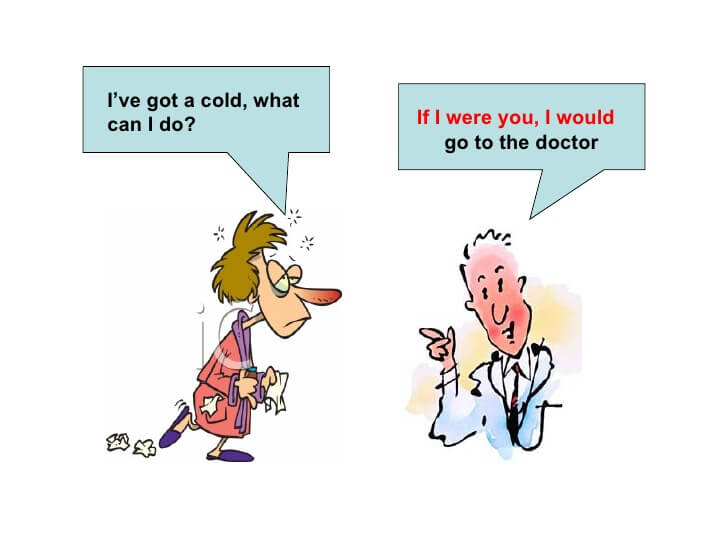
7 years ago [postview]

Grammar

When to Use “If I was” vs. “If I were”, Which One is Correct?

A lot of people use “If I was” instead of “If I were” when they use a subjunctive mood in a hypothetical situation.

Just so you know – this is wrong!

According to English rules, when you use a subjunctive mood in a hypothetical situation, you should use “If I were”.

What is a Subjunctive Mood?

The subjunctive mood is used in a hypothetical situation when you state something that is contrary to the fact.

In other words, when you wish for something that is simply not possible, or unreal, you use a subjunctive mood.

Here are some examples of Subjunctive Mood:

✅ If I were you, I would work harder.

✅ If I were your father, I would take good care of you.

✅ If you were my girlfriend, I’d never let you cry.

✅ If he were taller, he’d be accepted into the basketball team.

✅ If she were alive, she’d be super happy to see you succeed.

In all of these examples, the mood is subjunctive, meaning, the speaker is speaking of a hypothetical scenario that simply can’t be true.

Where Can I Use “If I Was”?

Based on the aforementioned argument, it’s possible to use “If I was” when something is not true at the moment, but it can be if the speaker tried.

For example:

If I was the captain of this team, we could win more matches.

Explanation: The speaker is a team member at the moment, but it’s very much possible that he could be the caption in future. It’s NOT unrealistic for him to lead the team in future.

Let’s consider a few more examples:

✅ If he was guilty of his actions, he’d apologize.

✅ If Rand was hardworking, he’d make more money.

As you can see, in these examples, we’re not talking about an unrealistic scenario. Therefore, “was” is more appropriate.

Be Careful of the Common Mistakes

There are many non-native speakers who tend to use “If I was” to explain their past actions.

Please, note that you absolutely cannot use “was” in a hypothetical scenario of the past. Instead, you should use “had been”.

For example:

Incorrect: If I was driving, you’d have felt safer.

Correct:

If I were driving, you’d feel safer. (If the speaker is talking of the present scenario.)

If I had been driving, you’d have felt safer. (If the speaker is talking about a scenario which has passed.)

Final Words

As you can see “If I were” is used only when it’s clear something is simply impossible, e.g., if I were a bird. Similarly, “If I was” is used when you presume a fair possibility of an event.

However, in practice, many purists still believe the speaker should stick to “were” if they were speaking of a situation that is currently untrue, e.g., if I were the captain.

On the contrary, many modern speakers believe it’s just a matter of choice. If you want to sound formal, use “were”.

8 years ago [postview]

Grammar

Visited vs Have Visited vs Had Visited: How to Use Them Correctly

Are you a non-native English speaker, confused between “visited vs. have visited”? This post will help you understand the grammar rules once and for all.

Using correct tense is an important part of every business communication as it reflects your personality, especially when you’re communicating with someone who is well-versed in the English language.

It’s quite common to find many non-native English users confusing “past tense” with “present perfect tense”.

So, let’s take a look at some examples below:

❎ I have visited the doctor this past week. (wrong)

❎ Have you met your mother yesterday? (wrong)

So, what do you think is wrong with these examples?

Explanation: This is a pretty common error in Asian countries where English communication is largely affected by their mother tongue. Many non-English languages carry grammar rules which can be very different from the grammar rules we follow in the English language.

In the English language, when you describe an event that occurs in the past, i.e. yesterday or last week, you essentially use the “past simple” tense of the verb.

In the examples above, “yesterday” and “this past week” are both “adverbs”, meaning they define the nature of the verb that precedes them.

In the first example, the speaker talks about an event (visiting the doctor) with information about its occurrence (this past week).

Please, note that the “timing of the event” (or time adverb) is of utmost importance here, which decides the “tense form” the verb must take in the sentence.

Here, “this past week” refers to an event that clearly occurred in the past. Therefore, the event itself (visiting the doctor) must take “the past simple tense”.

Hence, it would be right to express yourself in the following way.

I visited the doctor this past week.

Similarly, the correct version of the second example would be:

Did you visit your mother yesterday?

To make it even clearer for you, here’s how you should break the sentences to understand which tense they should take.

I + visited + the doctor + this past week

Visited = the “past simple tense” of the verb “visit”.

This past week = the adverb denoting “timing of the event”.

Know Your Adverbs

It’s important to know your adverbs well enough in order to form correct sentences, using the appropriate tense.

Let’s consider a few examples with different adverbs.

Now, Currently, Right Now, Today

You can use either present continuous or present perfect tense with these verbs. However, you can never use “past simple” with these.

For example, the following examples would sound plain stupid:

❎ He was unemployed currently. (incorrect)

❎ He’s unemployed currently. (correct)

❎ Was he sick right now? (incorrect)

❎ Is he sick right now? (correct)

❎ I came here today. (incorrect)

❎ I’ve come here today. (correct)

However, there are some “adverbs” that can take both “past tense” as well as “present perfect tense” depending on the context.

Here are Some Examples:

✅ Example #1: I have purchased a CD player recently. (present perfect tense)

✅ Example #2: I purchased that CD player recently. (past simple tense)

Oxford Dictionary defines “recently” as an adverb denoting “at a recent time” and “not long ago”.

Explanation:

In Example #1, we are using a perfect tense in order to name the action as the source of the present state. Whereas, in Example #2, we are using a past tense since the action is one of a sequence of past actions, a narrative.

Please, keep in mind the present perfect is a present tense, which makes a statement about the situation at the time of speaking.

However, the following example would be incorrect.

❎ I have purchased that CD recently.

This is because when you are talking about purchasing “that CD”, you have presumably purchased it in the past. Therefore, you should rather say, “I purchased that CD recently”.

Visited vs Had Visited

Believe it or not, many non-native English users find it hard to differentiate between past simple tense and past perfect tense. They often wonder if the two could be used interchangeably.

The truth is both these tenses offer different contexts to the event. Take a look at the following examples:

  • Example #1: I visited my doctor yesterday.
  • Example #2: I had visited my doctor yesterday.

Which of the above examples is correct?

Answer: The first one.

Explanation:

We use past tense when the time is specified, e.g. yesterday.

We use past perfect tense only when we refer to another event (a concurrent event) in the past. In other words, it must carry some context – “what happened after you visited the doctor yesterday?”

For example:

I had watched television yesterday when it was time to go to bed.✅ Activity in the past = “it was time”.

✅ Activity before the past = “had watched television”.

I had watched television yesterday, by the time my parents came back.

✅ Activity in the past = “my parents came back”.

✅ Activity before the past = “had watched television”.

In short, without any context to “the other activity” that was done after watching television, using “had watched” would be incorrect.

Therefore, if you only mean to mention “watching television” in the past, simply say, “I watched television yesterday”.

I hope this helps. Please, let me know if you have any questions.

Source: Stack Exchange and Quora

8 years ago [postview]

Grammar

For Two Years vs. Since Two Years: Which One is Correct?

Grammatically speaking, For and Since are both prepositions that can be used in a sentence to express a specific time or period of time depending on the context.

Many believe these prepositions can be used interchangeably but as a matter of fact, that’s not true.

In fact, this is one of the common English errors I’ve seen people commit while expressing themselves on social media websites.

So, what’s the difference between For and Since, and how do you use them correctly while talking about time?

Let’s see some examples:

Example #1:

Incorrect: I haven’t seen him for last week.

Correct: I haven’t seen him since last week.

Example #2:

Incorrect: She has been suffering from fever since past two weeks.

Correct: She has been suffering from fever for past two weeks.

Since – a Specific Point of Time

You use Since when you talk about a specific point of time in the past around which an event took place. In Example #1 above, “Last Week” is the specific point of time around which the person was last seen. Remember Whatsapp?

Some more examples:

✅ I’ve been missing you since you were gone.

✅ She’s been feeling a bit dizzy since yesterday.

✅ Have you been behaving this way since childhood?

✅ He’s been much better since he quit smoking.

✅ I’ve never liked her since the first time I saw her.

If you pay attention to the underlined phrases in the examples above, you will realize they are actually a specific of time and not a length or period of time.

Important: Note that we use “Perfect Progressive” tense in all of the above examples. That’s because we mean to talk about something which has been occurring from a specific point of time and hasn’t actually stopped happening as we speak.

Therefore, it’s imperative to use this tense every time you use Since to talk about a period of time.

For – a Period of Time in the Past

You use For when you want to talk about a period of time or length of time in the past from which an event has taken place. In Example #2 above, “Past two weeks” is the period of time for which the person has been suffering.

Some more examples:

✅ India hasn’t conceded a boundary for the last ten overs. (in Cricket)

✅ I’ve been meaning to tell you the truth for the past six months!

✅ The Government has been fooling its people for the past three years.

As you can see, the underlined parts in the above examples indicate a period of time, as against a specific point of time.

Important: Note that we use a “Perfect Progressive” tense in all of the examples above. This is because we talk about an event that has been happening for a period of time and it hasn’t stopped occurring yet.

How to Avoid Mistakes while using For vs Since

The trick is to understand what a particular phrase actually means before using the right preposition.

There are many situations that may confuse some learners, especially those who don’t use English as their first language.

For example, can you say which of the sentences below is correct?

I’ve been working on this task since a long time.

I’ve been working on this task for a long time.

Well, the second example is the right answer. However, if Google it, you will see this actually confuses many learners.

The reason is some “a long time” may appear like a specific point of time to some while many agree it’s only a period of time in the strict sense.

Even some users try to use “a long time ago” to mean a specific point in time. For example:

I’ve been living here since a long time ago.

However, it’s still not acceptable in Standard English because the point of time is not very specific here. Unless you specifically want to be secretive about the specific date, you should use for example, since 2010 (date) or last year to denote the specific time.

The good news is you can alter the sentence structure and use both Since and For as per your convenience depending on the message you want to send.

Sample This:

✅ Example #1: I’ve been standing in line for the past two hours.

✅ Example #2: I’ve been standing in line since it was very cold in the morning and ticket counter wasn’t open.

As you can see the second sentence makes a very strong argument.

Recommended Reading: Past Year vs Last Year: Which One is Correct?

9 years ago [postview]

Vocabulary

Past Year vs Last Year vs Passed Year: Which One is Correct?

While talking about past events, many people can be found confused between past and last. Contrary to what many believe, past and last cannot be used interchangeably. They are used to describe different conditions of an event with regard to a particular period or phase of time.

Let’s take a look at the following examples.

  • I’ve been waiting for you for the last two hours. (incorrect)
  • I’ve been waiting for you for the past two hours. (correct)

But look at the following examples.

  • Although he started off really slow, he managed to catch up with the goal in the last three sessions. (not past three sessions)
  • Although he bowled quite badly at the beginning of the innings, he managed to pick up five wickets in the last two overs. (not past two overs)

The Explanation

Last: We use last when we want to talk about a period of time which is the final phase of a certain activity or event.

Past: We use past when we want to talk about a period of time that has just gone by recently.

So, if you’re talking about waiting for someone (as shown in the examples above), it’s correct to use the past two hours since you mean the period (two hours) that has just gone by.

You cannot use the last two hours since it’s not a phase of any event. In fact, the only event here is waiting for two hours. In other words, those two hours are the period of time which has just gone by waiting for your friend.

Some more examples…
In his last three years, he wrote two biographies. (described to talk about a person who has passed)

Last Year vs Past Year

Last year means the last calendar year, for example, 2015 (if you’re in 2016).

Past year means the 365 days preceding today. For example, if it was 14th Feb, 2016 today, then the past year would mean the time between 15th Feb, 2015 and 14th Feb, 2016.

For example:
He completed his MBA last year (for example 2015) but he’s been looking for a job for the past year. (for example, from 4th of July, 2015 until 3rd of July, 2016)

This Passed Year vs This Past Year

One of the most incorrectly used phrases in English is “this passed year”. Many users who commit this error believe “passed” has the same meaning as “past”, but that’s incorrect.

Here are some examples of incorrect usage:

  • You’re passed your bedtime. (incorrect)
  • You’re past your bedtime. (correct)
  • The popular actor past away. (incorrect)
  • The popular actor passed away. (correct)
  • He bought these shoes this passed weekend. (incorrect)
  • I bought these shoes this past weekend. (correct)
  • He walked passed the danger line. (incorrect)
  • He walked past the danger line. (correct)
  • The Uber drove passed its destination. (incorrect)
  • The Uber drove past its destination. (correct)
  • Sam got passed the finish line in record time. (incorrect)
  • Sam got past the finish line in record time. (correct)

Explanation

As you can see “Passed” and “Past” both share the same sound and this is probably why “passed” is often incorrectly used.

Grammatically speaking, ‘pass’ is a verb that has a range of meanings depending on the context. Let’s take a look at a few examples below:

  • Sandra passed the exam with distinction. (succeed in a test, past tense)
  • I’ve passed your notes to your friend. (hand over, present perfect)
  • My boss passed by me without giving me a glance. (go past something)
  • Sometimes I feel life is passing me by. (leave someone behind)

As you can see in the third example mentioned above, ‘passed’ often can mean to “move past” and indicates the motion of a person or an object.

Similarly, the word “past” has a wide range of meanings including ‘time before the present.

For example:

  • She has achieved a lot in the past two years. (adjective)
  • There’s no point in looking at your past. (noun)

However, ‘past’ can also be used as an adverb or a preposition as well.

For example:

  • He ran past. (beyond, adverb)
  • Mike walked past the door. (beyond, preposition)

This is exactly where many get confused and end up saying “passed” when they actually mean “past”.

It can be confusing for many since, in some cases, both variations are possible.

Look at the following examples:
You have passed the bedtime = You are past the bedtime.
However, in natural speech or writing, it sounds awkward to say, “you have passed the bedtime”.

What did we learn?

Whenever you’re confused about whether “he walked past or passed the door”, remember “walk past” as a phrasal verb.

Similarly, don’t say “this passed weekend” when you mean to say “this past weekend”.

Confused about whether she will “get past or passed the finish line”? Apply the same logic as advised in the first example.

I hope this post clarifies your doubts. If you find this post useful, share it with your friends.

9 years ago [postview]

Grammar

Why “Couldn’t Able to” is Incorrect and What You Should Say Instead

Whenever I read comments on Facebook posts on the newsfeed, I cringe at the silly errors they commit. With the growing internet consumption, people actually grow up reading blogs that are teeming with grammar errors.

One of those glaring examples is “couldn’t able to”.
For Example:

  • I couldn’t able to sleep last night.
  • So what’s wrong with the example above?

Let me explain…

To understand the use of ‘could’, one needs to understand the rules of ‘modal verbs’ in English.

Here’s the deal.

Both can and be able to can be used to explain the ability of a person, especially when they try to do something.

For Example:

  • I can answer that question = I am able to answer that question (sounds a little formal)
  • Similarly, here are some examples in which the speaker is talking about his/her ability in the past.
  • I could walk much faster when I was 15 = I was able to walk much faster when I was 15.

Moreover, when you talk about a situation in the past when you tried harder to achieve something and succeeded in it, then you usually use ‘was able to’ or ‘managed to’.

For Example:

The test was very tough; I was able to answer only four out of ten questions. (the speaker tried his/her best and could do only four)

OR

The test was very tough; I managed to answer only four out of ten questions. (managed to = was able to)

Note that you can also use the following sentence:

The test was very tough; I couldn’t do more than four out of the ten questions.

If you are wondering if you could use ‘I could do only four out of ten questions, then the answer is you can but it will explain the situation clearly enough.

In fact, this is the reason why they use ‘managed to’ or ‘was able to’ – it clearly says something was difficult.

Here are some more examples:

  • I managed to book three tickets for the show. (the speaker indicates difficulty)
  • She was able to clear the test on her fourth attempt. (the test must have been tough)

Now that the rules are clear to you, take a look at the sentence below:

I couldn’t able to sleep last night.

So, what’s wrong?

Sure, the speaker has mixed up two things here: couldn’t and able to whereas he should have used just one, for example:

Either: I couldn’t sleep last night. (they were partying hard in the neighborhood)

Or: I wasn’t able to sleep last night.

The next time you notice something writing  ‘can’t able to’ or couldn’t able to, just share this link with them.

More Resources: Learning English with BBC

9 years ago [postview]

Vocabulary

What the Heck is a Flagship Smartphone?

The prevalent misuse of “Flagship” among tech journalists in the context of the release of new smartphones has made it difficult for many English learners to comprehend the actual meaning of the word.

In this post, I will try to clear the confusion surrounding the word once and for all. Take my word for it.

Taylor Martin, a former tech journalist from the popular tech publication, Pocketnow tried to answer one of the most frequently asked questions in the smartphone world.

What does the word “Flagship” really mean?

While I highly recommend the article, I’ll try to briefly rephrase his words for those who are just too lazy to read the post.

The word “Flagship” originated as a naval term to denote the most prominent or important vessel in a fleet or ship carrying the commander. In the tech media world, the word is supposed to be used for the most expensive and high-end smartphone from a company.

Wikipedia defines the term “flagship” as the best or most important things owned or produced by a particular organization.

So typically, a flagship is almost unanimously considered the biggest product, largest, and most important single item in a group of products from a company.

However, the word has been tossed around so carelessly that it has come to lose its meaning altogether, confusing many learners that follow tech publications regularly.

Consider the following examples:

What’s the best flagship of 2016?

The first affordable flagship from Samsung.

In the above examples, the term flagship is simply used as a synonym for “smartphone”, which is confusing and misleading in the strict sense of vocabulary.

Similarly, many tech journalists and bloggers tend to mention, “Flagship Smartphone” in their reviews. Basically, they simply mean “high-end” or “premium” smartphones. However, by their very definition and context, both are very different from each other.

For this very reason, one cannot just use the word “flagship” to describe smartphones that are considered “budget” or “affordable” by the company.

For example, Apple released two smartphones – iPhone 6s and iPhone 6s Plus – in 2015. Going by the semantics, you can describe the iPhone 6s to be Apple’s flagship smartphone because it’s projected as a more visible and popular model from Apple.

In short, a “flagship smartphone” is supposed to be the one that commands the line of smartphones released by any manufacturer in a year.

When the term is used in a rather lenient way, it can also mean a particular smartphone model that a company intends to promote and sell more than any other models within its line-up, whether or not it’s the most expensive of the lot.

Note: If you want to learn more about the phrase, follow this discussion on Quora.

9 years ago [postview]

Vocabulary

How to Use Sit and Seat in Sentences

Oftentimes, people tend to commit errors with regard to the use of Sit and Seat. Many people, especially in a non-English speaking country, tend to use Seat as a noun. However, there are situations where using Seat as a verb is necessary to convey the message appropriately. This is exactly what this post aims to do.

So, let’s take a look at how we could use Sit and Seat as verbs under a number of circumstances.

Example #1: I’d like to sit next to you, please!

Explanation: The speaker himself wants to sit next to the person she is speaking with.

Example #2: I’d like you to sit next to my father, please!

Explanation: The speaker is requesting a person to sit next to her father.

SEAT (verb)

Meaning #1: Arrange for (someone) to sit somewhere.

Meaning #2: To have or provide seats for

Example #1: Don’t worry; I’ll seat you next to your father.

Explanation: A lady is assuring her kid that she will help him sit next to his father. The kid can’t choose the seat himself and needs to help from his mom.

In the day-to-day speech, however, people tend to use sit more often.

For example:  Don’t worry; I’ll make sure you sit next to your father.

Example #2: The stadium seats about 7,000 people.

Explanation: The stadium has the capacity to accommodate 7,000 spectators.

I hope this helps!

10 years ago [postview]

Grammar

Please Find Attached: How to Mention Email Attachments

Please find attached or Please find the attached? Many people want to know the correct way of mentioning email attachments. So, let’s find out the correct way to mention email attachments.Here are different ways people write to mention email attachments.

Example #1: Please, find attached the report you asked for yesterday.

Example #2: Please, see the attached report for the budget estimate.

Example #3: Please, find the report attached.

In the examples above, there are two key components:

#1 – Position of the adjective “attached”

#2 – Use of the article “the”

Generally, an adjective is used before the noun in order to denote its attributes. For example, when you say “he’s a talented writer”, talented denotes the attribute of the noun (writer). However, in some cases, they use adjectives after nouns, e.g. “I want someone special”. When adjectives are used after nouns, they are known as “postpositive adjectives”. In modern business communications, the use of postpositive adjectives is rare. In fact, they are used to invoke a particular emotion. For example, “there are places unexplored”.

Therefore, some grammar purists wouldn’t approve of the following usage:

Please, find the report attached. (attached is a postpositive adjective here)

The other important point is the use of the article “the” in the examples above. As you already know, the article “the” is usually used to specify an object. Look at the two examples below:

#1 – I saw a cool bike yesterday.

#2 – I saw the cool bike again earlier today.  (use of “the” denotes a specific object)

Based on this grammar rule, Example #1 looks perfectly fine since the email sender is mentioning “the report” which the receiver has asked for.

In other words, the usage “find attached the report…” sounds acceptable in such a context.

Therefore, if you want to use “find attached the report”, make sure you add something that makes sense, e.g. “you asked for yesterday”.

Find the Attached vs See the Attached

Some people believe it should be “see the attached…” instead of “find the attached…” as using “find” might mean “to search for” in email communications. The notion is actually debatable since the word “Find” has several meanings. However, if you want to be safer, you can go with Example #2: “Please, see the attached report for budget estimate”. In this example, the use of article “the” is appropriate and the attached is used as an attributive adjective. In other words, it’s the most acceptable format of mentioning email attachments.

Variations of Example #2:

✅ Please, find the attached file for a better understanding.

✅ Please, find the attached file as per your request.

✅ Please, find the attached file you asked for.

✅ Please, find the attached file relevant to the case.

Some more examples:

Please find the attached file for your review

Please find the attached file for your request

Please find the attached file you requested

Please find attached the file you have requested

Please find the attached file for your reference

Please find attached file for your kind reference

Please find the attached file for your approval

Please find the attached file and let me know

Please find the attached file for my resume

Please see the attached file for my resume (informal)

Please see the attached file for details (informal)

Please see the attached file for your perusal (informal)

Please refer to the attached file for your perusal

Please refer to the attached file for your kind perusal

Please find the attached quotation for your perusal

Please find the attached invoice for your payment

Please find the attached file in this email

Please find the attached file herewith

Please find the attached document for your review

Please find the attached document for your records

Please find the attached documents for your signature

Please Find Attached vs Please Find Enclosed

Many people wonder if using the word “enclosed instead of “attached” would denote a more formal tone. But there’s nothing like that. “Enclosed” is used for physical mails whereas “attached” is appropriate for emails.

Alternatives to “Please Find Attached”

  • The attached diagram shows . . .
  • The attached spreadsheet contains . . .
  • When you review the attached proposal, you will notice . . .
  • As promised, I have attached a revised . . .
  • Please let me know if the attached draft . . .
  • Here is . . .
  • Enclosed are . . .
  • Attached is . . .
  • We have enclosed . . .
  • I have attached . . .
  • The attached proposal includes . . .
  • The enclosed document shows . . .
  • Please see attached…
  • Please review the attached diagram . . .
  • The attached spreadsheet covers . . .
  • Please use the enclosed envelope to . . .

So, remember the following rules for email attachments:

✅ “Please, find the attached file,” is more common in modern business communications. However, it’s NOT the only acceptable format.

✅ Always add context to the above format. For example, say “Please, find the attached file you requested yesterday.”

✅ When you don’t want to specify any particular file, avoid using “the”. You can simply write, “Please, find attached.” or its abbreviated form: PFA.

✅ “Attached” is the correct word for electronic communications. Enclosed is used for physical mails where envelopes are used. Don’t get confused.

✅ “Find” has more than one meaning. It doesn’t really mean you’re asking the recipient to search for something that is lost.

The rules of the English language are so complex that we often find many common errors in uncommon places. The problem is often compounded for the non-native English speakers who usually learn the language by assuming many things to be correct. Therefore, we see many people resorting to wrong usages in their everyday interactions.

Hopefully, you’ll find this guide useful.

11 years ago [postview]

Grammar

Common English Errors: Few, A Few and Quite a Few

Apart from Douchebaggery, there’s another thing that is hard to miss on Facebook: Poor Grammar.

Visit any Facebook Page and you will cringe at the degree of syntax errors people commit pretty innocently. One of those most frequently committed errors is the confusion between “Few” and “A Few”.

Don’t Say “Few” When You Mean “Some”

I have come across a lot of people who use “few” when they mean to say “some”.

Here’s one such example: “Few people will never change their behavior.”

In the above example, apparently, the person wants to say, “Some people will never change their behavior”.

Technically, the word “Few” suggests a small number of people or things. When we use the word “few”, we want to indicate that the number is smaller than what we expect or what is normally found in a particular situation.

For example, if you see only 5 to 10 students present in a classroom session for which 50 students have enrolled, you can say there are “few” students in this session.

Similarly, when we say there are few buyers for this product, we usually mean to indicate a number that is smaller than “our” expectations or that is generally expected in similar situations.

Some more examples of “few” would be as follows:

There were few spectators for the match. (meaning the stadium looked rather empty for its capacity)

There were few people in the street last evening. (meaning we usually see a larger number of people in the street during the evening everyday)

A Few = Not a Large Number

Compare the two sentences given below:

I have few friends who can help you with this. (meaning I have barely any friends who can help you or I have no friends who can help you with this)

I have a few friends who can help you with this. (meaning I have some/ a couple of friends who can help you with this)

Here’s another comparative example originally found on Stack Exchange.

“I have a few objections to the vendor’s proposed approach.”

This implies that I am not on board with the vendor’s proposal. I have some objections, but not so many as to say “I have several objections…”. Nevertheless, I have objections that need to be addressed.

“I have few objections to the vendor’s proposed approach.”

This is a more positive statement that implies I am more or less on board with the proposal. It is not a whole-hearted endorsement, but I barely have any objections at all.

You can read more about this here on Stack Exchange.

Quite a Few: Definition

The idiom “Quite a few” confuses many English learners from around the world because of the irony it holds. It is important to understand there are many idioms in English that originated from conventions rather than rules. This essentially means you cannot change their structure.

What “Quite a few” really means

Quite a few means a fairly large number of something. It is usually used in a relative sense, meaning more than what is expected in a usual scenario. To keep it simple, though, it is synonymous with a large amount/number, a huge amount/number, and a significant amount/number of something.

Here are some examples of “Quite a few”

Quite a few people: A large number of people.

For example, Quite a few people got the wrong impression.

Quite a few times: A significant number of times.

For example, I’ve seen this movie quite a few times and I know every dialogue by heart.

Quite a few years / Quite a few years ago: A long time / A long time ago.

For example, Quite a few years have passed since he got married. // I met him quite a few years ago so I may not recognize him now.

Quite a few of them: Most of them.

For example, Quite a few of them were corrupt and I couldn’t work with them for a long time.

Quite a bit: A fairly large amount.

For example, There’s quite a bit of snow on the ground.

“A Few” vs. “Quite a Few”

There is a very common expression “quite a few”, which is a trap for foreign learners because it looks like it could mean “rather few or very few”, but it does not.

“Quite a few” expresses that the speaker was impressed or astonished by the number, as they would have expected less. Or the speaker wants to emphasize the fact that it was “more than you would think”.

Look at the following example:

Quite a few people were seen at the sea shore despite the cyclone warning by the weather department.

In the above example, the speaker doesn’t mean that the beach was crowded. He only means that he hadn’t expected as many visitors at the sea shore on a day when the cyclone panic was endemic.

As stated in the example above, “Quite a few” is used only when a specific number (of people or things) are not expected in a given situation.

However, it has become quite common for people to use it to mean “many” or “a large number of”.

It means the exact opposite thing: “a large or significant number, or many”. So, saying “I have quite a few friends” is the same as saying “I have a lot of friends”.

You can read more about this phrase here on Stack Exchange.

Being a student you may experience some difficulty in grammar. So you can improve your grammar and writing skills by getting help from CustomWritings – English essay writing service and its professional academic writers.

11 years ago [postview]

Grammar

Would vs Would Have: How to Express Conditional Hypothesis

Before I begin, I would like to explain what hypothetical conditions actually mean. Hypothetical is something that isn’t real or just imaginary.

For example, in a sentence, “I wish I were a Spider-Man”, you imagine something that isn’t possible or real.

Sometimes, we want to express thoughts in a way that both talk about a hypothetical instance in relation to a condition.

Here’s an example:

“If I were a Spider-Man, I would fly everywhere”.

In the above example, the person expresses his wishes of flying everywhere on the condition of being a Spider-Man. To explain it further, his not being a Spider-Man negates his chances of flying.

Here’s another example:

If I had enough money, I would definitely buy this house. (You won’t buy this house because you don’t have enough money but you kind of wish you had enough money)

Note: Please, note that in the above examples, both conditions are in relation to the present time. Therefore, the use of “were” or “had” doesn’t say anything about the past.

While the above examples are based on the present hypothesis, there are situations when we express a conditional hypothesis that has relations with the past.

For example:

If I had worked harder, I would have made it to the top position in that company.

In the example above, you’re essentially talking about an outcome (you not making it to the top position) that didn’t happen because some conditions weren’t fulfilled, i.e., you working harder.

However, we can hear many speakers using the following structures these days.

  • #1 – If I would have worked harder, I would have made it to the top position in that company.
  • #2 – If I would have been in his position, I would have taken the right decision.

As a matter of fact, both these sentences are structurally ungrammatical.

The correct structures of these sentences should be as follows:

  • #1 – If I had worked harder, I would have made it to the top position in that company.
  • #2 – If I had been in his position, I would have taken the right decision.

Here’s a thread on Stack Exchange that explains this usage with more examples.

Sometimes, we talk about the conditional hypothesis which is related to both past and present life.

For example:

If I had saved enough money in my youth, I would be living a happier life.

In the example above, the speaker is apparently in his old age and wishing for something he can no longer perform. However, his present life is affected by his past action.

Here are some more examples:

If he hadn’t done well in the training courses, he wouldn’t be a Project leader now.

Note: The keyword is now. He is now the Project Leader but would not now be the Project Leader if he hadn’t done well.

Now, let’s compare the following examples:

  • Ex #1: If he hadn’t done well on the training courses, he wouldn’t be a Project leader now.
  • Ex #2: If he hadn’t done well on the training courses, he wouldn’t have been Project Leader.

(In the second example, the person is no longer the project leader in the company because he may no longer be working in the company)

Now, let’s compare the following examples:

  • Ex #1: If I had money, I would fly to Spain.
  • Ex #2: If I had had money, I would have flown to Spain.

(In the first example, the speaker is apparently financially weak but wishing for something hypothetical. Note that both instances belong to the present time.

In the second example, the speaker simply talks about his past. Note that both his actions belong to the past only.)

Here’s a question for you: Is the following sentence grammatically correct or wrong?

If I were a Spider-Man, I would have flown everywhere.

PS: Please, answer the question in the comment section below.

11 years ago [postview]

Grammar

Grammar Mistakes or Grammatical Mistakes? Using Attributive Nouns Correctly

During our conversation on Skype, a friend from Nevada interrupted me when I said, “They’ll conduct a second round of telephonic interview.”

He then apologized to me, saying, here in North America, we don’t say “telephonic interview”; “telephone interview” is more common here.

That made me super curious about the phrase and I started Googling just to see how people around the world (esp non-native English speakers) would use words in situations like this.

In fact, that’s the motivation behind this guide.

Grammar Mistakes or Grammatical Mistakes?

This is one of the many queries non-native English speakers are curious about.

Maybe they have been in a similar situation? Who knows!

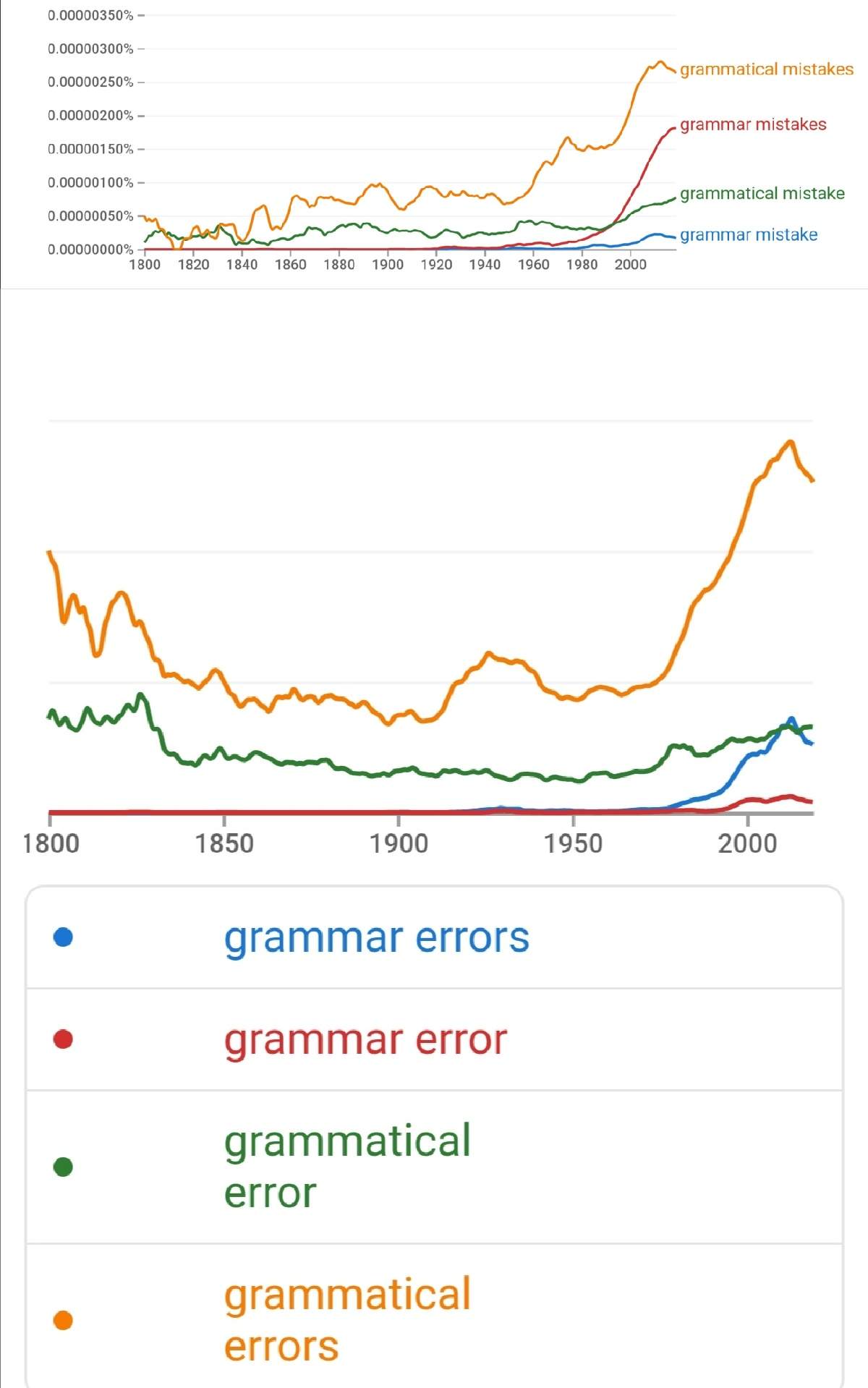
When you turn to Chat GPT for answers, it says both “grammar mistakes” and “grammatical mistakes” are grammatically correct, but they are used in slightly different contexts.

So, what are the contexts?

Grammar vs Grammatical Mistakes

Everyday Language vs. Formal Writing

“Grammar mistakes” refers to errors or inaccuracies in the use of grammar in written or spoken language. For example, using incorrect verb tense, subject-verb agreement, or punctuation.

“Grammatical mistakes” is a more formal term for the same concept. It also refers to errors in grammar usage but is often used in more technical or academic contexts.

In everyday language, “grammar mistakes” is more commonly used, while “grammatical mistakes” is frequently seen in formal writing or discussions about language and linguistics. Both phrases are correct, and the choice between them depends on the context and style of writing.

So, according to the Chat GPT explanation, it’s essentially a matter of specific use cases and scenarios. That makes perfect sense.

However, there’s another convention attached to this distinction.

Attributive Noun vs. Adjective

In the phrase “telephone interview”, both telephone and interview are nouns, but telephone performs the action of an adjective by attributing a nature to the interview.

In other words, it defines how the interview is conducted, ie. over the telephone.
When we say, “telephonic interview”, we essentially use the adjective instead of the attributive noun. So, it’s just an alternative to “telephone interview”.

In many countries such as India, however, the use of “telephonic interview” is very common among speakers (even in corporate offices).

Why is that? You may wonder!

Let’s just say Indian English is more formal or is it one of those common English mistakes Indians make?

Similar Guide: 6 Common English Vocabulary Errors and How to Avoid Them

This brings me to the next question – how do I use an attributive noun correctly?

How to Use Attributive Nouns Correctly

Attributive nouns are very common in everyday speech. Some examples are:

Music Class, Sea Food, Night Sky, Car Park, Country Road, Flight Tickets, Math Teacher.

While attributive nouns are a great and easy alternative to their adjective forms, they must be used judiciously.

In one of his blog posts, Ben Mudrak, an AJE author, cautions users to tread carefully in order to avoid causing confusion among readers.

Brevity is often paired with ambiguity, he quips.

For example, when you say, “voter awareness”, it could mean both of the following:

Awareness that voters are present
Awareness of a particular topic among voters

Likewise, when you add an adjective to an attributive noun, it could add to the confusion.

For example, a “small truck driver” could both mean a diminutive driver of a normal truck and a driver of a small truck)

Indeed, a good grasp of attributive nouns can help ward off such potential mistakes.

I hope this guide is useful to you.

2 years ago [postview]

Grammar

7 Grammar Errors that Drive British People CRAZY

Even as the English language is evolving and modern usages are making their way to universal acceptance, there are many usages that are still not correct by conventional rules.

In this guide, let’s take a look at the common English errors found mostly in the United Kingdom. There are many grammar mistakes and phrases that drive British people crazy. Well, not literally.

Let’s take a look:

“Of” instead of “Have”

Many people are in the habit of saying “of” after should/could incorrectly. It’s mostly true for people who have developed a habit of speaking by listening to others.

For example:
I would have told you about it. (Right)
I would of told you about it. (Wrong)

He should have tried harder. (Right)
He should of tried harder. (Wrong)

Can I get instead of Please, may/can I have

It’s interesting how phrases can have a varying degree of politeness in speech. While British people tend to use “Please” more often than not, North Americans are often more direct.

For example:
Please, may I get / can I get a coffee! (British)
Can I have / Can I grab a coffee! (American)

If you want to sound polite while asking for permission, you might want to use words such as “Please”, “May” or “Have”.

Mispronounce Letter H as Heytch

As an Indian, I have seen many people (especially IT professionals) mispronouncing the letter “H” as “Heytch”. As a result, they would pronounce words like “HD” as “Heytch Dee”, “HR” as “Heytch Aar”.

If you’re wondering where they picked it up, it’s probably their workplace where they worked with some British coworkers.

In the United Kingdom, many speakers tend to mispronounce the letter “H” (eytch) as “Heytch” which often gives their Indian friends the impression that it’s the right pronunciation.

Overuse of ‘Like’

Using “Like” as an emphasis is a common scenario among the British people, especially in everyday speech.

For example:
It’s like so annoying! (Wrong)
It’s so annoying! (Right)

Not only the British, but many Indians also tend to commit this error while speaking.

Was Sitting down / Sat down

It’s also common for many British people to say “I was sat down” when all they mean is “I was sitting down”.

For example:
I was sitting down / I was sitting on a bench. (Right)
I was sat down. / I was sat down on a bench. (Wrong)

Misuse of Reflexive Pronoun

Reflexive pronouns are some of the most misunderstood rules in English. Like many people around the world, British people also tend to make mistakes. Among all reflexing pronouns, “Myself” is the most commonly misused.

For example:
Myself and Tom will help you. (Wrong)
Tom and I will help you. (Right)

Yes, that’s myself. (Wrong)
Yes, that’s me (Right)

Using adjectives instead of adverbs

There’s a good deal of confusion when it comes to the difference between good and well. Good is an adjective while Well is an adverb. However, quite a few people (including British) tend to interchange them, especially in their everyday conversation.

For example:
He did good. (He did something positive)
He did well. (He did it nicely)

Note: When you say, “He did good”, you actually mean he did some good deed. On the contrary, “He did well” means he did something well, meaning his performance in something.

Question:
How are you doing today?

Answer:
I’m doing good. (Wrong)
I’m doing well. (Right)

Note: When you say, “I’m doing good”, it actually means you’re doing some good deed, e.g. giving loads to charity, your lunch to a homeless person.

Credit: English with Lucy (YouTube)

5 years ago [postview]

Grammar

9 Cringe-Worthy Grammar Bloopers Nearly Everybody Makes

Nearly all of us make some of these embarrassing grammar mistakes without even realizing it. Check out the list to see if you’re aware of these flubs.

Even the most image-conscious people commit grammar blunders in their day-to-day life. With incorrect words, spelling, and punctuation, many people leave a wrong impression on others. Make no mistakes — people often make assumptions about your education and intelligence based on your grammar and vocabulary. Here’s a list of the most common grammar mistakes nearly all of us make without being aware of them.

First-come, First-serve

First-come, First-serve

The idiom “First come, first served” essentially means a group of people or things will be dealt with or given something in the order in which they arrive.

By leaving the “d”, it suggests the person who arrives first will be the one who serves everyone. That’s funny!

I Could Care Less

I Could Care Less

When you say you “could care less”, you essentially mean you still have “some care” to be allocated to something. However, that’s not what you really want to say when you want to say you’re not bothered about something at all. Therefore, the right idiom is “I couldn’t care less”, which means you care about something the least.

Irregardless

Irregardless

Regardless means without regard. For example, Sam will eat chocolate regardless of the consequences.

There are no such words as “Irregardless”. Avoid it or look silly!

“I” as the last word in a sentence

Many people tend to end their sentences with “I” when it should be “me”.

For example,

  • He spoke to Sandy and I. (Incorrect)
  • He spoke to Sandy and me. (Correct)

Whenever in doubt (I vs Me), the trick is to take the first person’s name out of the sentence and see how the sentence sounds with the personal pronoun left. In the above sentence, “He spoke to I” would sound odd.

Likewise, it’s incorrect to use “Me” in the beginning.

For example,

  • Me and Shelly met at the park earlier today. (Incorrect)
  • Shelly and I met at the park earlier today. (Correct)

Emigrated to

Speaking of immigration, there are two words that often confuse users — emigrate and immigrate.

Emigrate is always followed by “from” while immigrate always go with “to”.

For example,

  • Jacob emigrated from Australia to the United States.
  • Jacob immigrated to the United States from Australia.

In short, “to emigrate” is coming from somewhere while “to immigrate” is going somewhere.

Overuse of apostrophes

Unless you’re using texting or tweeting, it’s always important to use apostrophes in the correct way.

Broadly speaking, apostrophes play two vital roles in grammar: to indicate possession or shorted form.

For example,

  • Tom’s iPhone (Possession)
  • There’s (Shortened form of There is)

However, apostrophes are often overused.

For example,

  • FAQ’s (It should be FAQs)
  • The Thomson’s (It should be The Thomsons)
  • 1990’s (It should be the 1990s)

The first-year anniversary

The word year is redundant here — the “first anniversary” should suffice.

Subject and pronoun disagreement

The subject-pronoun agreement is one of the tricky affairs. The thumb rule says the pronoun should agree with the corresponding subject. However, many people tend to overlook this critical aspect.

Take a look at the following examples:

  • A person who smokes damages their lungs. (Incorrect)
  • A person who smokes damages his/her lungs. (Correct)
  • Those who smoke damage their lungs. (More correct)

In the first sentence, the subject (a person) is one person while the corresponding pronoun (their) represents a collective noun. Therefore, they don’t agree with each other. While the second sentence is correct, it’s not often the best way to say it. Therefore, the third sentence is more correct.

Overuse of “literally”

Literally means actually. You shouldn’t use it unless something actually happened. Many people, however, tend to exaggerate their expressions by overusing “literally”.

For example,

  • They’re literally moving mountains to win the trophy.
  • It was so boisterous that my head was literally exploding.
  • In his youth, Michael was literally a greyhound.
  • My school gym is like literally 500 years old.

Do you know any other bloopers worth adding to this list? Please, let me know in the comments below!

6 years ago [postview]

Grammar

So Do I vs. Me Too: Which One is Correct?

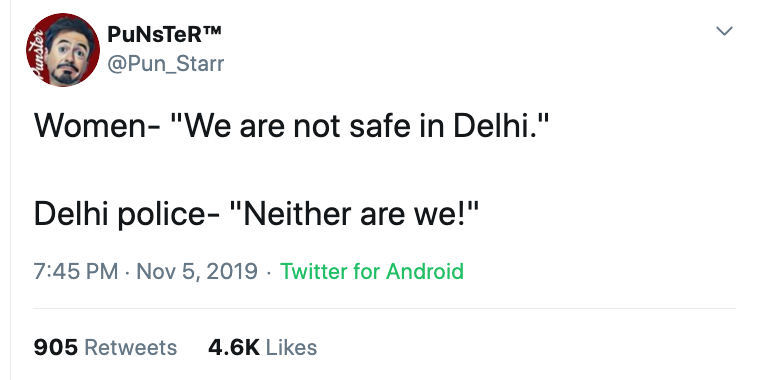
Recently, I came across the following tweet.

Women- "We are not safe in Delhi."

Delhi police- "We too."

— PuNsTeR™ (@Pun_Starr) November 5, 2019

Even as the tweet was retweeted over a thousand times, I was surprised to find nobody pointed out the glaring mistake.

Can you see the error in the above tweet?

That’s right — “We Too”.

In English communication, there is a convention to follow when you express your agreement/disagreement with someone.

For example:

I love ice-cream — So do I.
I am quite honest — So am I.
I have seen that movie — So have I.
I must leave now — So must I.
I would be surprised — So would I.

Note: You could also use “Me Too” instead of the above responses. However, “Me Too” is very informal in nature. So, be prudent considering the situation and context.

In all of the above examples, the speaker is talking about themselves. What if they were talking about someone else?

For example:

She’s always late — So is he.
He has many friends — So does she.

In the above examples, your response is about someone else. It’s important to note the agreement between “subject” and “verb” as well.

Agreeing with Negative Speeches

If the speaker is using negative speeches, your agreement should be negative too.

For example:

I don’t like politics — Neither Do I (Nor Do I in the UK)
I didn’t make it — Neither Did I (Nor Did I in the UK)
I’m not fond of Jazz — Neither Am I (Nor Am I in the UK)

Note: You can’t use “Me Too” as a response in agreement to the negative speeches. However, you can use “Me Neither” in informal communication.

Therefore, it’s wrong to say “Me Too” in response to the above examples.

Keeping the convention in mind, the tweet should have been as follows:

Agreeing with Negative Speeches

6 years ago [postview]

Vocabulary

Adjective Word Order Exercises: Rules to Remember

As you know, adjectives are words that define the quality of nouns. Adjectives usually come before the noun although there are some exceptions to this standard rule.

But when you have to use to more than one adjective, you should follow the right order for the sentence to make perfect sense.

In this guide, I will share with you some easy-to-remember rules that will help you use the natural order of adjective easily. At the end of this guide, you will also have some adjective word order exercises for fun.

Rules of Natural Order of Adjectives

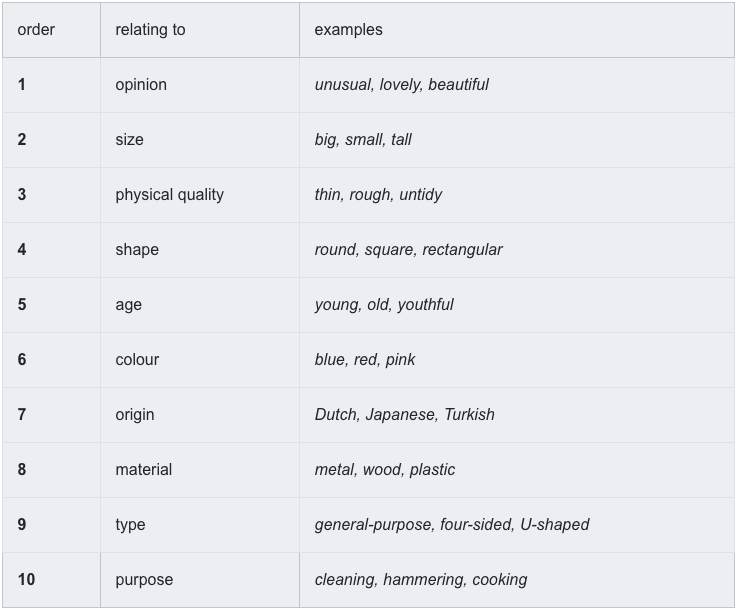
When you want to use multiple adjective before a noun, the first adjective should be the one that describes opinions or attitudes.

Other adjectives which are more factual or neutral by nature should come thereafter.

For example: “He’s an eminent American writer.”

Please, note that our focus on this sentence is to highlight his fame and popularity rather than his nationality.

Therefore, if we change the order of adjectives and say, “American eminent writer”, it doesn’t sound natural.

Here’s another example: “She’s one of the talented contemporary African American writers.”

When you don’t want to emphasize any particular adjective, play by the rules, and follow the natural order of adjectives.

Here’s a visual cheatsheet for your easy reference:

natural order of adjectives

Adjective Word Order Exercises

Okay, here are some questions if you want to test your understanding of the natural order of adjectives.

Luau is _____ party.

  • A traditional Hawaiian beach
  • A Hawaiian traditional beach
  • A traditional beach Hawaiian

A lei is a garland of _____ flowers and leaves typically worn around the neck.

  • Exotic colorful Hawaiian
  • Colorful exotic Hawaiian
  • Exotic Hawaiian colorful

My favorite _____ shirt was made in China.

  • Old black cotton
  • Cotton old black
  • Black cotton old

At Kuala Lumpur airport, I bought _____ hat.

  • A beautiful French red and
  • A beautiful red and white
  • A French beautiful red and

The students came out of the cathedral in their _____ cloaks and their _____ pinafores.

  • Scarlet bright; clean white
  • Scarlet bright; white clean
  • Bright scarlet; clean white
  • Bright scarlet; white clean

A ukulele is a ______ instrument, which resembles a guitar.

  • Small Hawaiian musical
  • Small musical Hawaiian
  • Hawaiian small musical

My grandmother kept her family photos in a _______.

  • Black small wooden
  • Small black wooden
  • Small wooden black

In our new apartment we have some ______ furniture.

  • Exotic old Italian
  • Italian lovely old
  • Old Italian exotic

Answers

A traditional Hawaiian beach

Exotic colorful Hawaiian

Old black cotton

A beautiful red and white

Bright scarlet; clean white

Small Hawaiian musical

Small black wooden

Exotic old Italian

Keywords: adjective word order exercises, natural order of adjectives

7 years ago [postview]

Grammar

How to Use Adverbs – A Handy Guide

Adverbs are words that modify the meaning of a verb or an adjective. Here are some examples:

  • He spoke loudly. (Adverbs of manner)
  • Please, come here! (Adverbs of place)
  • I’ll see you tomorrow. (Adverbs of time)
  • You should practice it twice. (Adverbs of frequency)

In the examples of above, the words that modify the meaning of the verb are adverbs.

  • Loudly modifies the manner in which he spoke.
  • Here modifies the place where I’m asking you to come.
  • Tomorrow modifies the time when I’m planning to see you.
  • Twice modifies the frequency with which you should practice it.

Types of Adverbs

  • Adverbs of Manner
  • Adverbs of Place
  • Adverbs of Time
  • Adverbs of Frequency

Adverbs of Manner: As illustrated above, words that answer how an action is performed, are categorized as adverbs of manner. For example, words such as carefully, quickly, beautifully and clearly define the verb in a sentence.

NOTE: Although many adverbs end with a ‘-ly’, not all words with a ‘-ly’ are adverbs. Some of them can be adjective also. Here are some examples of words that not adverbs.
  • This is a weekly magazine.
  • It’s such a ghastly act.
  • let’s go for a leisurely walk.
  • He’s such a friendly person.

List of Adverbs Not Ending in -ly

Similarly, many words remain the same whether you use them as adjectives or adverbs. Here are some examples:

We’re close friends. (adjective)
Andy stood close to the door. (adverb)

He didn’t have a fair chance to win this competition. (adjective)
I don’t think she played fair. (adverb, meaning she cheated)

He loves fast cars. (adjective)
I don’t want to drive fast. (not fastly) (adverb)

I want a straight answer (adjective)
He went straight to his office (adverb)

Adverbs of Place: Words that answer the question “where” are “adverbs of place”. Here are some examples:

  • Can you come downstairs!
  • Please, sit down!
  • I searched for you everywhere.
  • Keep it inside your bag.
  • Stay close to your father.

Adverbs of Time: Words that answer the question “when” are “adverbs of time”. Here are some examples:

  • I met him last year.
  • We’ve met before.
  • You need to start now.
  • I quit five years ago.

Adverbs of Frequency: Words that answer the question “how often” are “adverbs of frequency”. Here are some examples:

  • I saw him only once.
  • He always gets late for his bus.
  • She never wants to meet you.
  • She rarely checks her emails.

Using Multiple Adverbs in Correct Order

When a sentence takes multiple adverbs, it’s important to use them in correct order. Here’s an example:

I met him reluctantly at the college twice yesterday.

The above sentence has four adverbs such as reluctantly (manner), at the college (place), twice (frequency), and yesterday (time).

As per the rules (royal order of adverbs), adverbs should appear in the following order.

1. Manner
2. Place
3. Frequency
4. Time
5. Purpose

Here are some more examples:

  • I’d like to see you / in my cabin / in ten minutes.
  • Speak truthfully / in the courtroom / tomorrow.
  • She danced happily / at her wedding / yesterday.
NOTE: Unlike adjectives, you can alter the order of adverbs in order to convey a particular meaning.

Keywords: Adverb error questions, Adverb error sentences, Spotting error in adverb, the order of adverbs

7 years ago [postview]

  • Page 1
  • Page 2
  • Page 3
  • Interim pages omitted …
  • Page 6
  • Next →

© 2025 Common English Errors · Built on Genesis · Privacy Policy · Sitemap · Contact

This website uses cookies to ensure you get the best experience on our website.